July 29, 2013

Lessons for a father - It Is All In Our Heads

Piyoosh Rai's picture of weights depicting baggage that we carry in our heads

Our son continues to be my teacher (unknowingly and unintentionally, of course) while setting new goals for himself. As determined as he is, at the moment, his valiant attempts to crawl are still a "work in progress". However, it is his persistence and single-mindedness that stops him from failing. The intent and ambition that our infant displays, on a regular basis, in trying to move forward, using all his limbs, is great to witness and an inspiration unto itself. The word failure, at least at the moment, does not exist in his head (actually no word exists there, I would think) and that is a huge advantage as I was to learn this week.

It so happens that as and when my wife and I get time, we like to work out. Like other new parents, we would like to do more but do not usually get to it with enough time or the requisite amount of motivation and strength. So the time that we do get, we try and utilize to the maximum. What also helps is we have one of the best trainers that this city has to offer and he makes sure that the fruits of our labor are sweet (it takes about a couple of days for the result to be anything but painful or for the soreness to go away). Daniel Baker (click here for his website), at least to me, is part trainer, part mentor and part psychologist who knows my strengths and weaknesses very well. His story keeps reminding me that wanting to excel is more an attitude than anything else.

While lifting weights this week, I reached my ceiling. I could not see myself lifting more than where I was at the moment. On the other hand Mr. Baker thought I had enough to lift some more. The conversation that ensued can be summarized thus:
  • Daniel Baker: Piyoosh, you are going to lift this new weight now.
  • Piyoosh Rai: I cannot. It is impossible to lift anymore.
  • Daniel Baker: You want to get better? Stop thinking. Lift
  • Piyoosh Rai: (in a skeptical tone) You are responsible for what happens next.
Surprise of all surprises, I was able to not just lift the new weight, but also to repeat the exercise 2 more times. Daniel was right. What was stopping me was not the extra pounds on the machine, but the block that I had in my head. That self-created limitation kept trying to convince me to not attempt something that had the potential of ending in failure. Listening and trusting my teacher was the best thing I could do. Apparently, I am not just getting physically stronger, I am also gaining mental strength.

In a sense Daniel reminded me of our role with our son. Unlike me, our son does not give up. He just does not know how to. That makes him stronger than I am, at least mentally. It also reminded me that to remove the existence of the word "failure" from my dictionary, all I had to do was give, to everything I do, my best without any fear to not be successful. What happens next, whatever it might be, is usually awesome and might very well be - life changing.


Are there any self-created ceilings that you suffer from? What do you do to push through it?

July 22, 2013

Lessons for a father - Ask Me Why

It is a very powerful thing this: the idea of asking why or making an attempt to get context.

I have always been a huge believer in the power of context. The validity of an event can, normally and for normal events, be debated by the people that are involved before the event occurs. However, something done by a person(s), at a particular time, under specific circumstances and limitations and with internal or external motivation(s) can hardly ever be debated when any of those factors change.

In our lives as parents, with an almost-crawler running our lives for now, it is very hard to, for an example, go back in time and debate if the crib that was purchased was the best in the market. At the time that the decision was made that may definitely be the case. Is it now though? Time has come to pass. More work and research in the field of infants has resulted in better products. An argument comparing the latest-best to the best-at-the-time can be very unfair to the decision maker. 

There are diapers, for example, that might have the capacity to let us know, electronically, when it is time for a change. Even with an unfair comparison inclining towards a futuristic product, would I support it? My geeky head finds it very interesting. My father-head, which wants to connect to our child and teach him the idea of respecting human follies and behavior, not so much. Yes, we can achieve near perfection with the diaper changing time, but would that take something away from a bond that is being created? I think so. What is next? a robotic milk feeder perhaps?


The same unfairness, based on a lack of context, can be prevalent in our work lives as well. An employee, wonderful in performance, is let go. The perception of the truth can lead to arguments against the executive machinery starting in a flash. A lot of time, these arguments are invalid. Why? What is missing? Context, our old friendly foe, of course. 

  • What if the organization has decided to change course and the person's technical expertise is no longer relevant? 
  • Also, what if the person was given the opportunity to cross train and they declined? 
  • What if the same executive that needs to work very hard, now, to control a sense of distrust and panic, gave glowing recommendations to the outgoing employee because of which they got a job in the next week? 
Why do we not know all this? Because we forgot to ask the most pertinent of all questions: Why?


Piyoosh Rai's picture of Whys

There will be a time, in the not so distant future, when our son is going to inundate us with that very question. At that time, in the future, may be I will repent ever writing this post. In the mean time, all I can hope is for our son to have the capacity to not just question our judgments and justifications, but of anyone that tells him to do something because of the simple reason that "that is how it has always been done".

July 15, 2013

Lessons for a father - The Good, Really Good and Consistently Good

It is not often that we see something really good happen before our eyes and not pause. I know I did, this week. 

The lesson, this week, came from another kid (not my usual teacher). His name is Ashton Agar and he represents, the country of Australia in the sport of Cricket.

Piyoosh Rai uses the image of Ashton Agar
Courtesy: www.theaustralian.com.au
We are talking about the Ashes. Not just any other Cricket series, but the Ashes, and this 19 year old shows up and batters records on his first outing as a batsman.That makes news. That is a good day in his career and for the annals of the gentleman's game. A team and a country rejoice. Those who stand in the opposition are surprised but still witness something magnificent. With a team full of world-class batsmen, Ashton Agar took an opportunity and almost single-handedly flipped a very bad situation upside down.

The difference, as he proved this week, between those that are good, no matter what their vocation is, and those deemed very good is that the latter almost always up their game when needed most. They deliver when the proverbial chips are down.

Given a choice almost all of us would tend to prefer the "very good" in our team. Correct? Sure. But what if we had another set of people thrown into the fray. Let us call them the consistently good. These are the kind that day after day and innings after innings (Cricket reference) do what needs to be done. They come in, understand the situation at hand, and in a very understated way do what they do best. More often than not their actions lead to success for the team and they are able to create a scenario where "exceptional" takes the form of the "expected".

The Clarkes, the Dhonis, the Amlas or the Ajmals (at least in Cricket) represent consistency. Their reliability, backed by historical and regular evidence, has made people believe that their presence in the team and on the field will lead to their respective team winning on any day. That is, obviously, not always the case, but their consistent performances have given them unwavering support and trust from their teams and from their followers around the world.

Mr. Agar had a good day. Some would argue and even call it a great day. He would, in all earnest, make a very good professional cricketer. He is undoubtedly really good. Let us all hope that he becomes a consistent performer for his country one day.

Yes, I would love to have a team of really good people. If, however, I had the option, I would always go for the ones that are consistently good.

July 8, 2013

Lessons for a father - Persistence The Conqueror

 “O snail
Climb Mount Fuji
But slowly, slowly!”
― Kobayashi Issa

A couple of things happened this week that made me realize, once again, how important it is for all of us to try and keep moving towards our goals. There will always be challenges on the way, but our sole intention should be to set a goal and never deter from the path that takes us there. And, who reminded me of this goal last week: two very disparate people.

It started off with our son trying to crawl. He has not been successful at it yet, and the attempts toggle between funny and sad, but he has never heard of the word failure. Every day, as soon as he gets on his belly, he goes at it with such ferocity that if he were in a pool of water he would be a swimming champion by now. But success, or at least the general acceptance of the term, has not patted his back yet. That does not deter him from trying and giving the next attempt his everything. There is no sense of "what-ifs" for him. Neither is there any work done to come up with an "Option B" - i.e., may be he can get away with an easier form of movement like rolling. That, from an infant, is a huge lesson in life. Everything from exercising, to relationships and to our professional lives can get so much better if we never thought of failure and just kept at it with an intent to reach our goal (whatever that goal may be).


Piyoosh Rai's picture depicting forward movement


The second part of the lesson came from a champion Tennis player. Andy Murray, of Great Britain, won the Wimbledon Tennis Championship today. If you follow Tennis, you would know that Andy, albeit a wonderful player, has not been able to fulfill the 77 year old dream of his country to win the, arguably, most coveted title of the world of that sport till date. Commentators and News-waalahs mentioned today that the win belongs to the entire nation and not just to one man. I would argue against that but would add that the celebrations do belong to the entire country. Andy Murray has been working very hard for the past many years now. With the presence of Tennis All-Time-Greats, like Roger Federer and Rafael Nadal, on the other side of the court, winning has not come easy. He has had to toil long and hard and so what he managed to achieve today was very well deserved.

Piyoosh Rai uses a picture of Andy Murray - the new Wimbledon champion
Courtesy: BBC
Both have taught me (completely unknowingly) that to be successful at anything I do, I have to remove the idea of failure from my life. There might be hard work and losses along the way, but to get to where I want to be, I need an unwavering trust and commitment in myself and to my goals. Both, in their own way, are champions.

July 1, 2013

Lessons for a father - Of losses and unimaginable strength

It is not usually the case that India stands united (on any topic other than Cricket and an often struggling state of peace with one of its neighbors). When it happens, if it happens at all, it makes the front page of world news. The last few weeks have been no different.

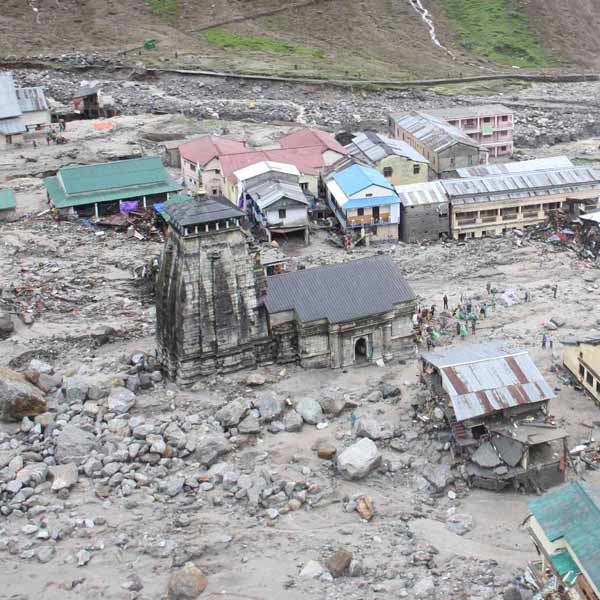
Piyoosh Rai shows an image of Uttarakhand #1
Courtesy: DNA India
The northern state of Uttarakhand, in India, is frequented by people of the country for reasons of faith. The state has the privilege of having, within its boundaries, some of the oldest and most auspicious temples and temple-towns of India. For reasons, mostly natural and some man-made, floods washed away entire towns some days ago. A natural calamity in India has the capacity of becoming massively exaggerated due to an ever increasing population and lack of infrastructure development at a steady rate. That is what happened. It is now being dubbed "Himalayan Tsunami" and by the time it becomes old news, hundreds of names, driven by faith, would get added to the "dearly departed" list.

Piyoosh Rai shows an image of Uttarakhand #2
Courtesy: Hindustan Times
While lives were being lost and the political bickering made headlines, one of the few true and working Indian institutions took over the relief and rescue work. The Indian Military (thankfully!) was called in and the state of the tragedy is now mostly under control and getting better, for the people, because of Indian Army, Indian Air Force, Indian Navy, the Indo-Tibetan Border Patrol Force (ITBP), National Disaster Recovery Force (NDRF) and a host of private organizations and NGOs.

Piyoosh Rai shows an image of Uttarakhand #3
Courtesy: India Today
Instances of leadership are on display on a daily basis in the rescue areas and relief camps. What is also on display, outside the state and national political establishment, is a group of highly trained, motivated and duty-bound personnel answering their call of duty. They are proving to us how difficult it can be, in times of duress, to keep our heads down and continue doing our work. Amidst political and, sometimes, nonsensical back-and-forth, we are proud to witness an elevated sense of focus, empathy and, at the risk of sounding absurd, calm. 

I hope that nobody ever faces what people back home are facing at the moment. I also pray that we can learn from our losses, as a people,  and appreciate a very basic trait from the great service to the nation that the Indian military provided: Let us answer when duty calls.


BBC's presentation in pictures of Uttarakhand: In pictures: Uttarakhand after the floods